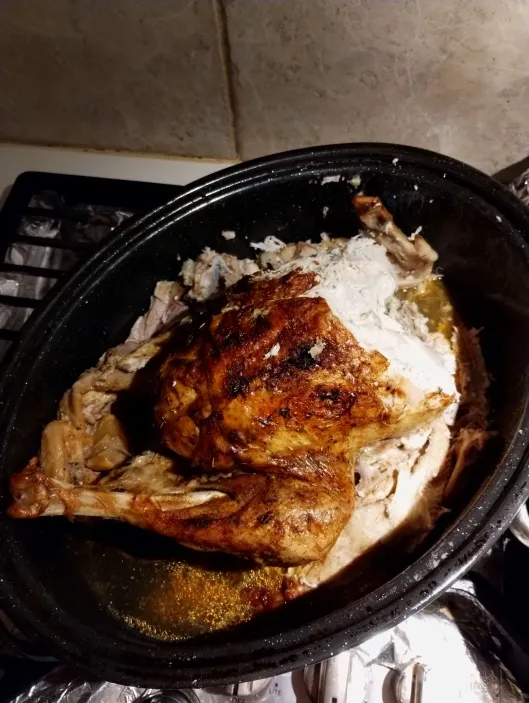
Just last week, the week of Thanksgiving, students got 1 full week of break to enjoy themselves. During this time, students got plenty of time to rest from school, as well as to go on vacation and have fun. One of the main events of this break, as suggested by the name, would be to celebrate the holiday of Thanksgiving, by cooking a large turkey. This is also usually accompanied with mashed potatoes, gravy, as well as broccoli for the whole family to enjoy.

It is said that the holiday dates back to the 1600s when English colonists and Native Americans gathered for a 3-day feast after completing a successful harvest, now being celebrated to this day. However, in the eyes of some Muslims, the tradition is viewed as impermissible, being haram for Muslims to celebrate in any way. But, in the eyes of other scholars, it is simply viewed as a national celebration everyone can partake in.
To try and accurately decide this, you must understand what Thanksgiving is celebrated for. Nowadays, people celebrate and reflect on the current year’s blessings, all the good things that have happened to them. It is about showing gratitude for the things you’ve been given, and reflecting on what you are thankful for. This gratitude can be shown in many ways, either in words, or actions. You might be wondering, how does this relate to Islam?
As discussed before, some Muslims avoid Thanksgiving, claiming it to be haram. This could be due to the history of the celebration, specifically its ties to Christianity as it dates back to the times of English colonists. However, many scholars within Islam don’t view it as a religious ritual, simply a cultural or national celebration. Not only that, but the themes it promotes are in line with Islam, being viewed as acceptable to be celebrated. Islamic values like shukr, or gratitude to Allah, reflecting on blessings, and maintaining family ties all fall in line with the celebration of Thanksgiving, these values being things that are celebrated within it. The general view is that as long as you follow the rules of Islam while celebrating, avoiding things like treating it like a religious holiday, or engaging in haram activities like alcohol, it is generally considered permissible in an Islamic perspective.
The Quran itself promotes gratitude to Allah in one of it’s many ayat, adding to the validity of Thanksgiving in Islam. The ayah is the following:
Abraham (14:7)
وَإِذْ تَأَذَّنَ رَبُّكُمْ لَئِن شَكَرْتُمْ لَأَزِيدَنَّكُمْ ۖ وَلَئِن كَفَرْتُمْ إِنَّ عَذَابِى لَشَدِيدٌۭ ٧
And ˹remember˺ when your Lord proclaimed, ‘If you are grateful, I will certainly give you more. But if you are ungrateful, surely My punishment is severe.’”
— Dr. Mustafa Khattab, The Clear Quran
https://quran.com/14/7
This verse exemplifies the importance and reward of gratitude in Islam, telling Muslims to always be grateful to Allah for the blessings you receive. As said before, this promotes the celebration of Thanksgiving, as one of the main themes of Thanksgiving is to show gratitude for all the blessings you received throughout the year.
All in all, Thanksgiving within Islam is typically viewed as national holiday with no real ties to other religion, being a neutral celebration that is free to be observed as long as it aligns with the Islamic themes and values discussed before.