The Advanced Placement (AP) exams are in less than 60 days (to see exact dates for your exams, click here). Students who take AP courses will be tested on everything they have learned in the past 9 months. These exams come with tons of stress with studying. Let’s explore to what extent does this stress affect AP students and their exam prep, and how you can pass or even ace these exams.
Yousuf Jisri, a Sophomore taking AP World History talked to us about his views regarding his upcoming exam on May 7th. He said that he was not stressed at the moment, but had a lingering feeling that the weeks leading up to the exam would definitely stress him out. We also asked him about his views on students taking more than one exam; he said that if he was in their position, he would be very stressed.
Many students feel pressure as AP exam dates approach. The College Board reported 3.2 million students took 10 million AP exams in 2025. As such, many students took two or more tests in one month. This tight schedule almost always increases stress, and AP students who go through extreme stress prior to the exam can actually end up with lower scores than others and a lower confidence in their ability to master their respective subjects.

In the concept of exams, we cannot talk about stress without defining it. Stress can be divided into two types. Eustress is stress that is beneficial. For example, eustress is the reason why you decide to spend extra time in a unit you do not understand to make sure you get the best grade possible on an assessment. On the other hand, distress is the opposite, as it causes you to feel anxiety and mental exhaustion. Distress can have a negative effect on your exam if you study while under its influence. That’s why it’s important to make sure that you take breaks in between study sessions and mentally reward yourself after reviewing a unit or chapter. The best way to study, however, is to take advantage of eustress by starting early, as it allows you to spend more time on material you don’t understand, and you wont feel like you need to rush through your preparation.
Statistically speaking, students who take AP exams have roughly a 60% to pass, or get a 3+ score. But this percentage can vary heavily from school to school, or even between students. As a result, passing rates for different courses can range anywhere from 50% to 80% in different courses, so it is best to make sure you are on the safe side by studying well. The best time to start your studies is now, as most tests are in about 60 days. Starting now gives plenty of time to thoroughly review all content while still remembering it.
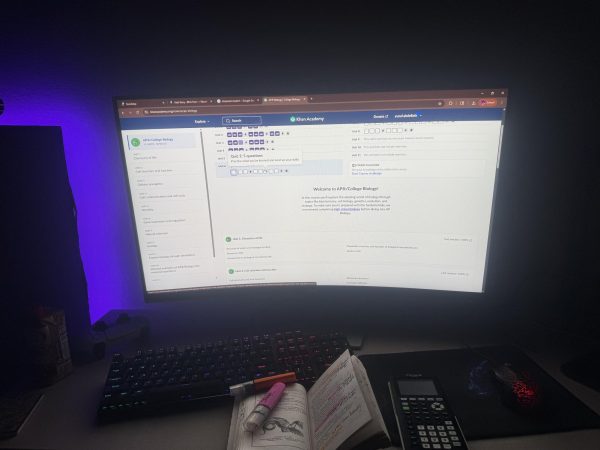
Study sources for AP exams include the Ultimate Review Packet, Khan Academy, and official College Board review videos, which follow the exact exam framework and provide accurate practice. AP Classroom offers topic reviews and practice questions, which can help you find weak areas. You should also ask your teacher questions when you do not understand a topic, because teachers understand exam expectations and provide useful feedback . Taking advantage of these resources will improve your preparation and readiness for the AP exam.
Finally, make sure you make plenty of dua to greatly increase your chances of scoring well!