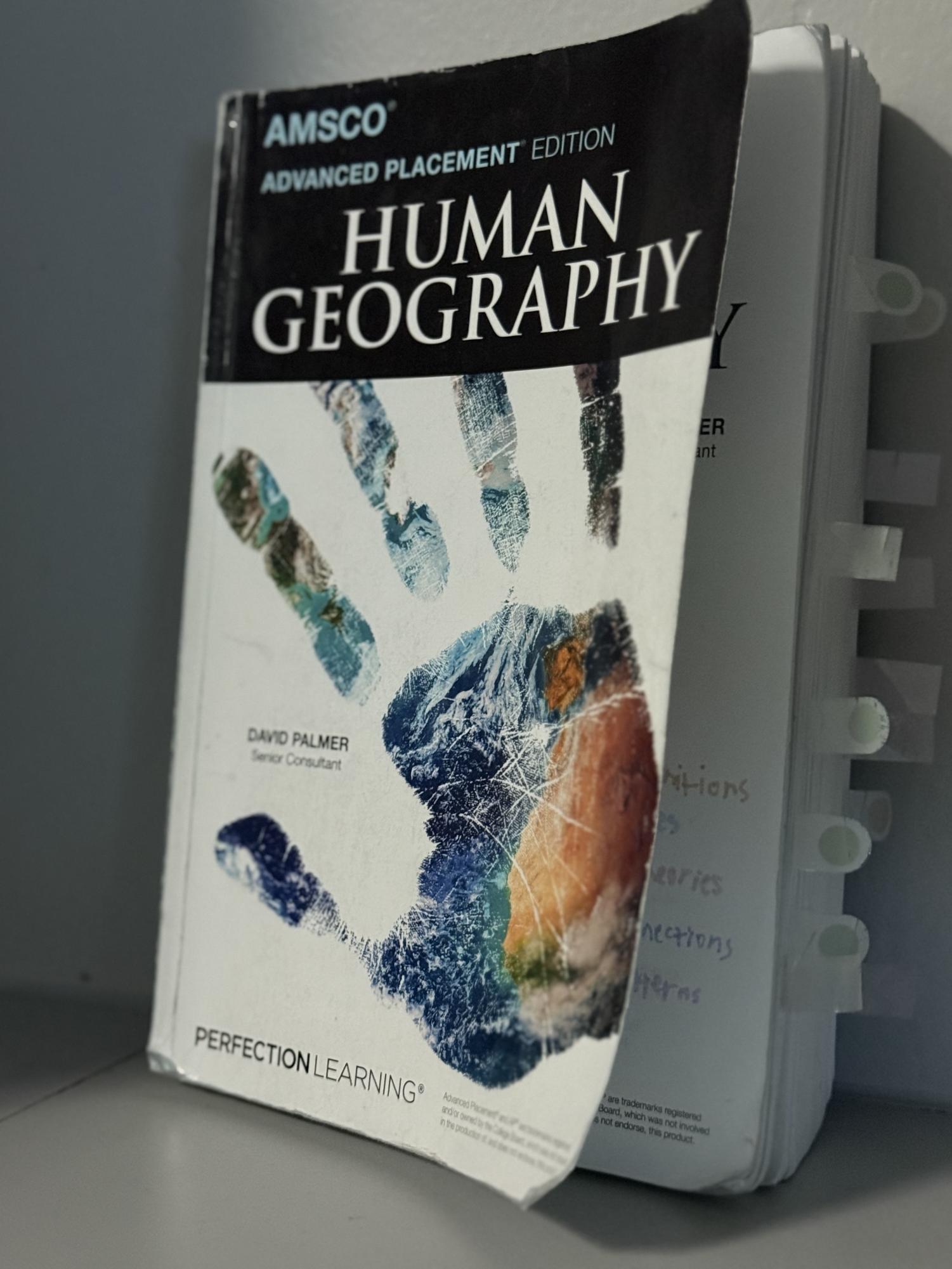
AP Human Geography (AP HuG) is a college-level course that teaches students how humans interact with the world around them. Unlike physical geography, which studies landforms, climate, and natural processes, human geography examines people where they live, how cultures develop, and how political boundaries formed. For AP students at BHA, AP HuG is their first Advanced Placement course, making it both an exciting and challenging introduction to higher-level learning.
In the classroom, AP HuG students learn to ask important questions such as: Why do populations grow faster in some countries than others? Why do people migrate? How do language, religion, and culture spread? Why are cities shaped the way they are? These questions help students think critically about the world and understand how geography influences daily life.
Throughout the year, the course is covered through several major units. Students begin with geographic thinking, learning how geographers use maps, data, and spatial analysis to interpret the world. They then explore population and migration, studying population growth, demographic models, and reasons people move. The culture unit focuses on language, religion, ethnicity, and cultural diffusion. Political geography examines countries, borders, nations, and global conflicts. Later units cover agriculture, urban development, and industrial and economic development, helping students understand food production, city growth, and globalization.
One of the most valuable aspects of AP Human Geography is its real-world relevance. The topics discussed in class connect directly to current global issues such as urbanization, inequality, environmental sustainability, and migration crises. By studying these topics, students gain a deeper understanding of how human decisions shape societies and environments across the globe.
The AP Human Geography exam consists of 60 multiple choice questions (MCQs) and 3 free response questions (FRQs). Multiple choice questions test vocabulary, models, and geographic concepts, while FRQs require students to explain ideas clearly, analyze patterns, and use real-world examples. Success on the exam depends on understanding concepts, and not just memorizing facts and being able to apply them logically.
To succeed on AP Human Geography tests and quizzes, students should focus on learning key vocabulary, understanding geographic models, and practicing written responses. Asking “why” and “how” instead of just “what” is essential for deeper understanding. Using examples from different countries and regions strengthens answers and demonstrates stronger geographic thinking. Students should also read before class and watch YouTube videos to reinforce concepts. Furthermore, completing practice questions, reviewing mistakes, and staying organized throughout the year can greatly improve performance.

Overall, AP Human Geography is more than just an introductory advanced course for freshmen. It it is a way of understanding the modern world. It also builds critical-thinking skills, global awareness, and analytical writing abilities that are useful far beyond the classroom. For students willing to stay curious and engaged, AP Human Geography can be one of the most interesting and rewarding classes they can take.
Afterall, in addition to teaching students how to think globally, it also teaches them to become more articulate and observant citizens of our ever changing world!